Money Agent Hackathon · AI agent · May 2026
First place at a five‑hour AI hackathon, with a working prototype instead of a mockup
5 hours to build, 5 minutes to pitch. I designed the full flow, wireframed it, then built a working prototype with Claude in 90 minutes.
Money Agent Round 3, Belgrade AI Hub.
Flow → wireframes → working prototype → pitch deck.
Built with Claude: React, animations, working interactions.
Five hours from an open brief to a prototype people could click
The prompt: build an AI agent that autonomously acquires customers, by creating campaigns, writing outreach, testing ad creatives, or any go‑to‑market play. One demo at the end. That was it.
- Contribution
- Design, Prototype, Presentation, Vibe coding
- Duration
- 5 hours, one working day
Our idea: test your post before you pay for it
We called it Synthie. It validates marketing campaigns on synthetic respondents — AI personas that stand in for your real audience — before you spend anything on real reach. Once the strongest variant is found, the agent publishes it and runs the campaign.
Two people, one clock.
Nothing could be built twice, so every decision had to land before we started.
Designer and vibe coder
Owned the full UX flow, fast wireframes, the working prototype, and the pitch deck.
Engineer, backend
Built the AI agent logic, persona generation, scoring, and onchain pieces.
The flow together, the wireframes alone, the prototype with Claude
CJM and flow — together
~45 min · both of us
We mapped the user journey and the agent's decision flow on a shared canvas — what the user sees, what the agent does in the background, where they meet.
Wireframes — solo
~30 min · just me
From the shared flow, I sketched fast low-fi screens. No styling, no copy polish — just the structure of what goes where, screen by screen.
Working prototype — with Claude
~90 min · me + Claude
I handed the wireframes to Claude and we built a working React prototype: animations, brand styling, interactions that respond. Wireframe to clickable demo in 90 minutes.
Polish and presentation
Remaining time
Extended the flow (dashboard, calibration), refined the visuals, built a keyboard-navigable HTML slide deck, rehearsed the pitch.
Wireframe → final, drag to compare
Drag the handle to slide between the fast wireframe and the Claude-built final. Five key screens from the flow.
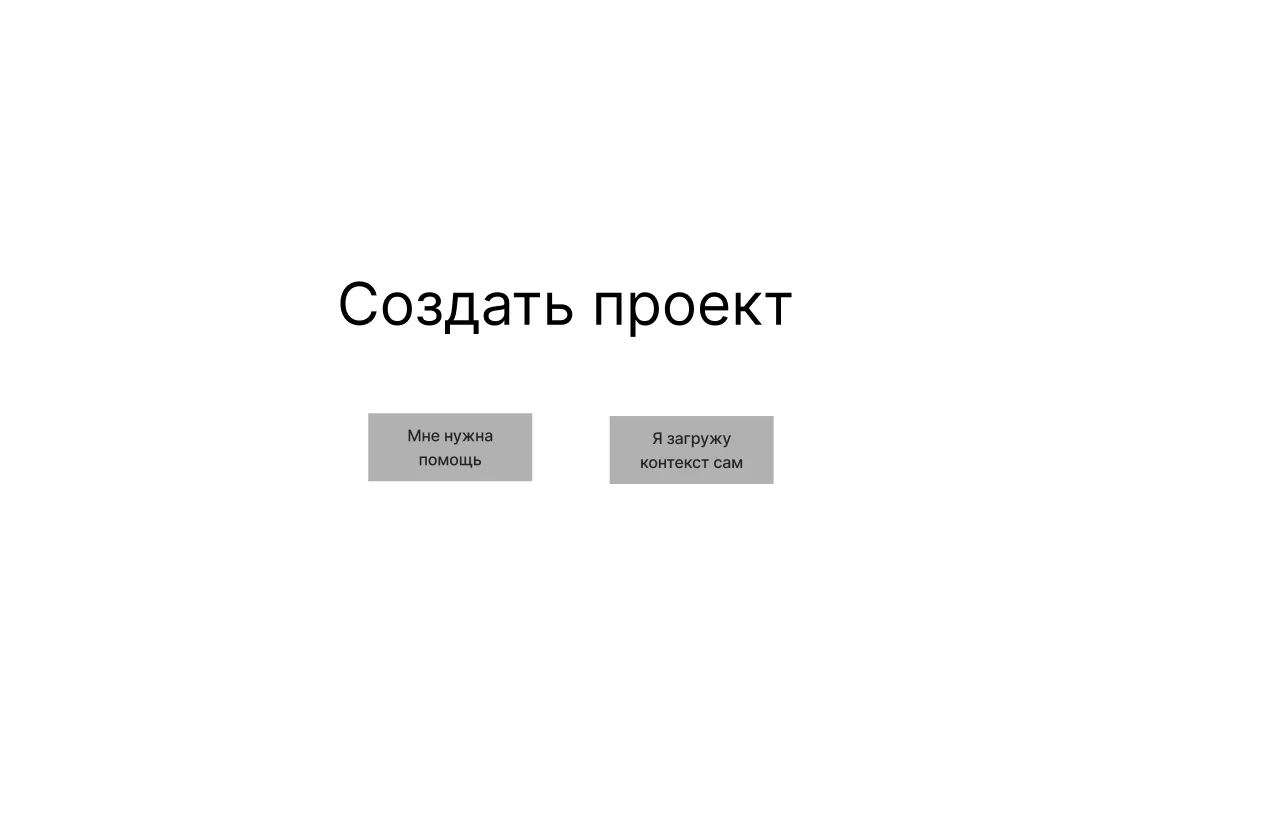
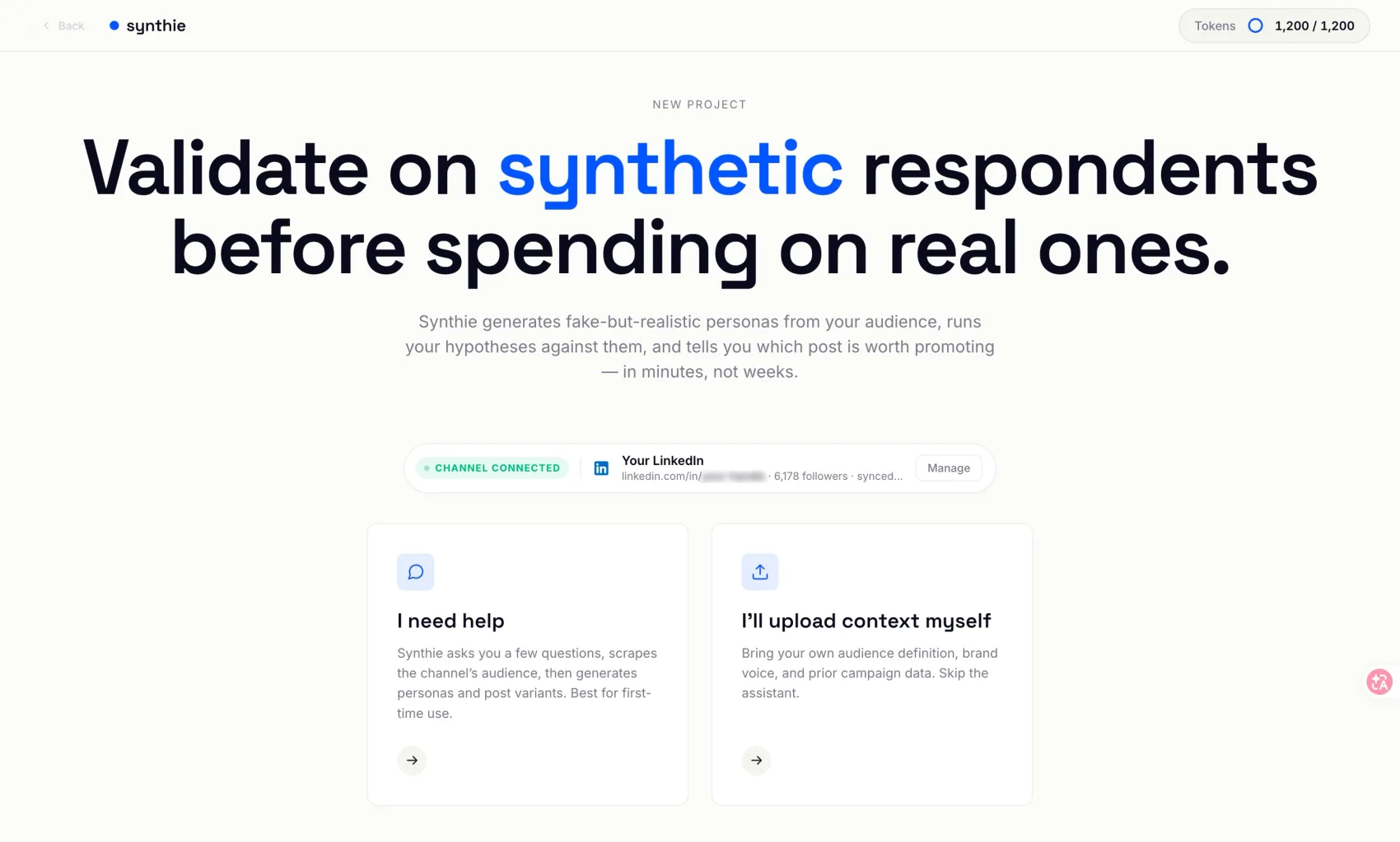
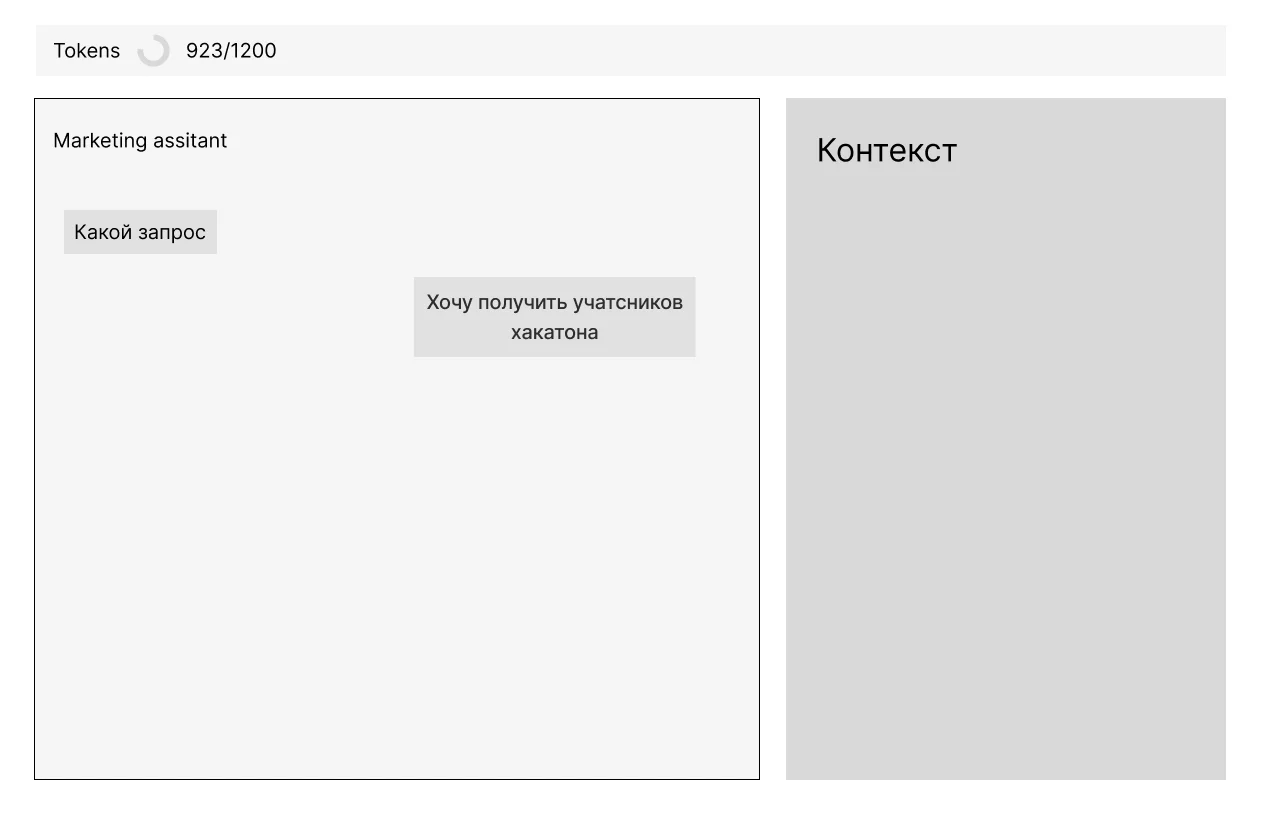
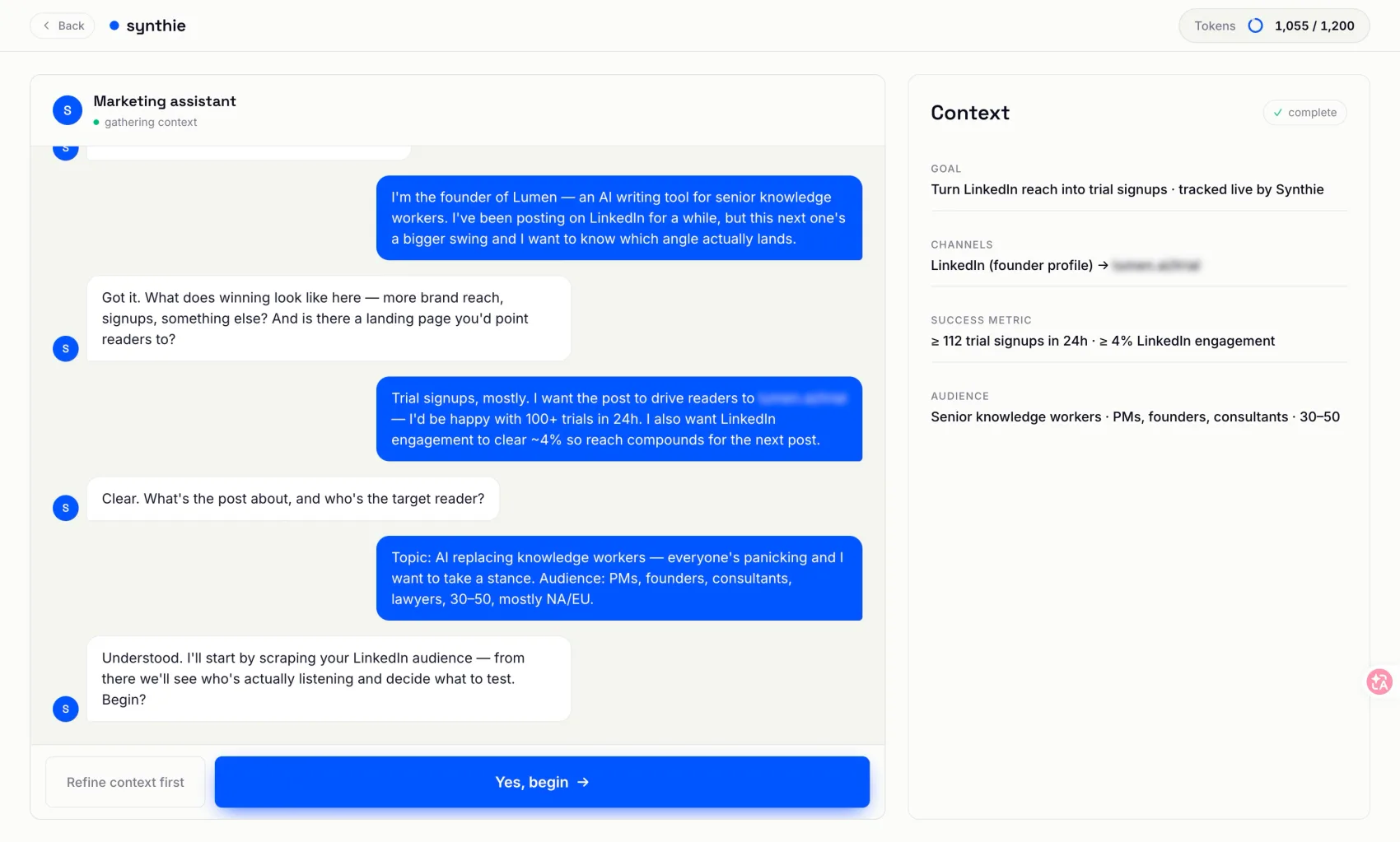
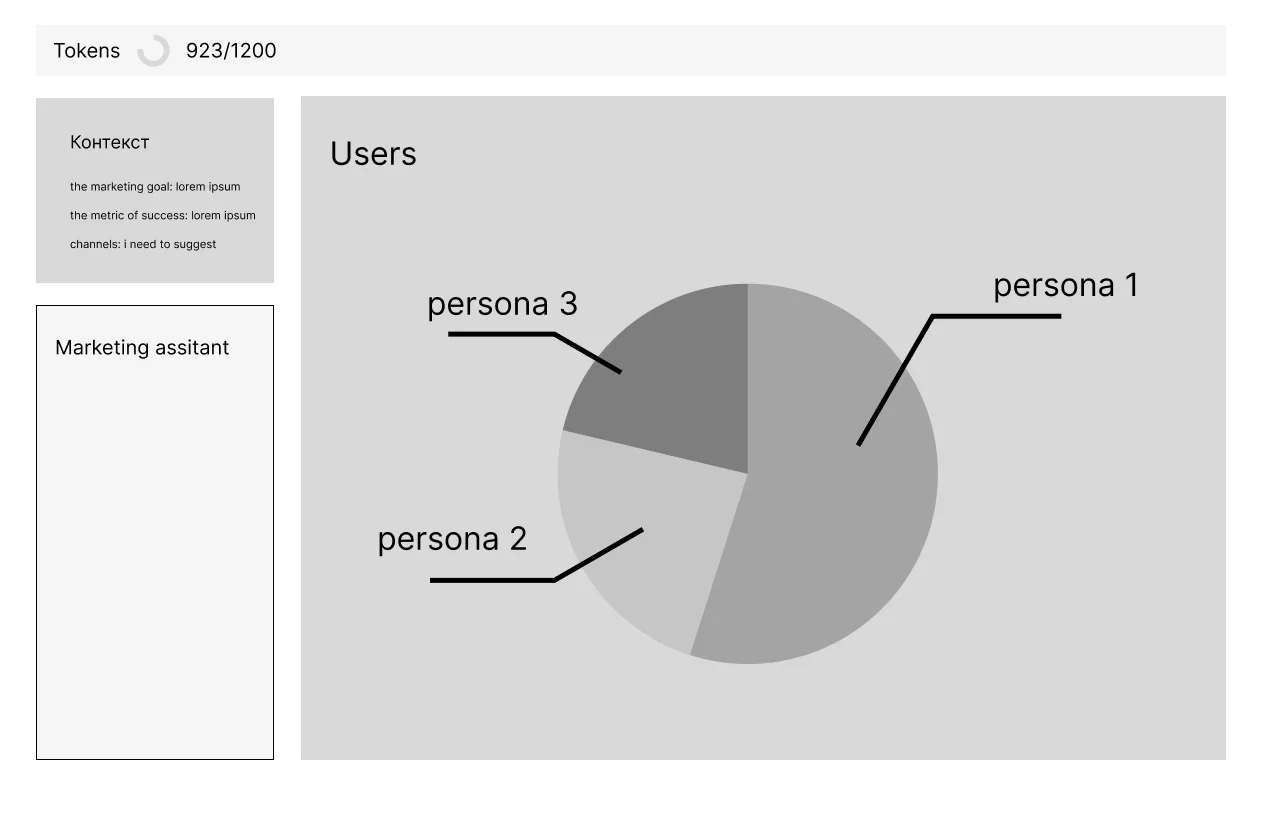
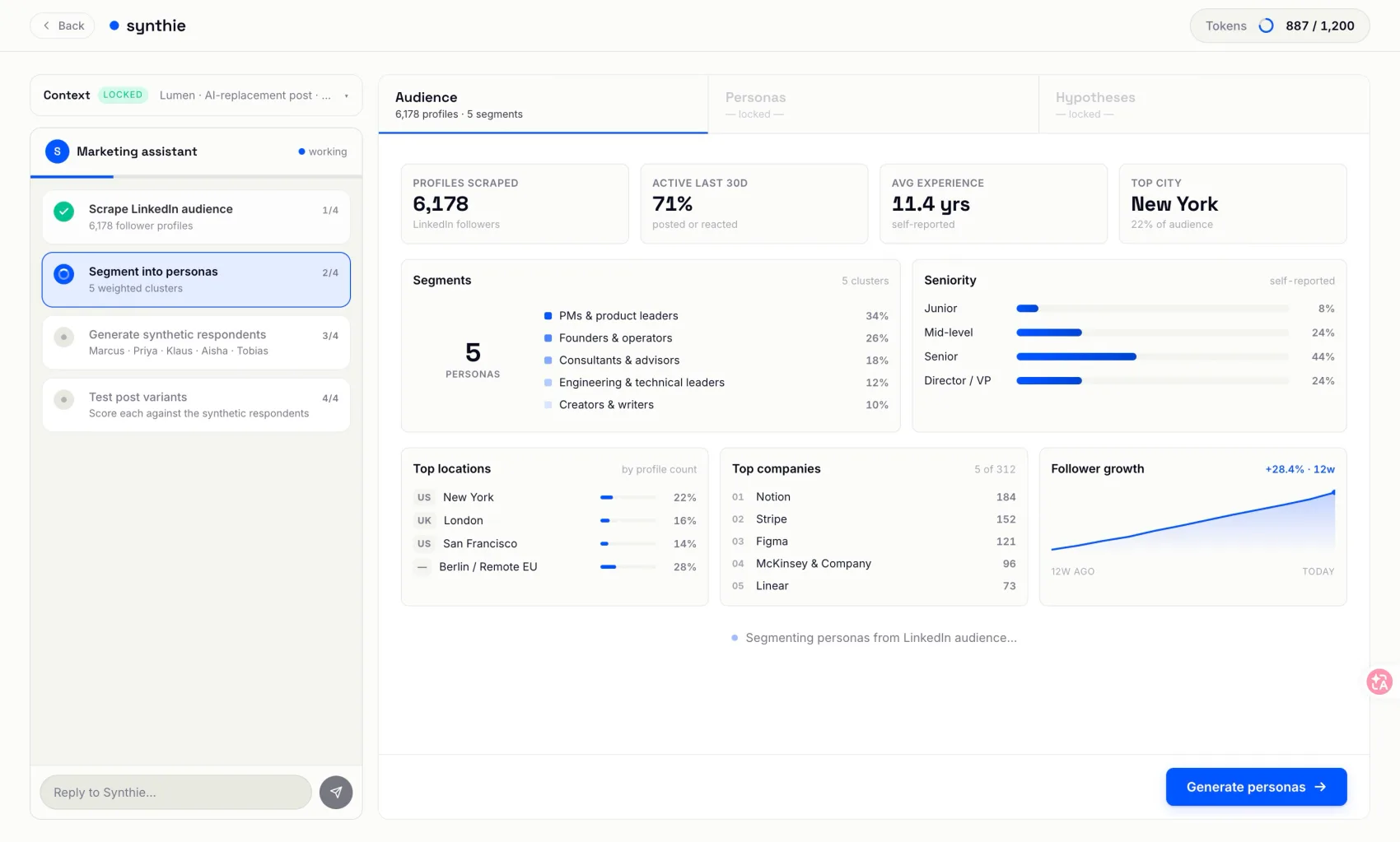
Step 4 — Synthetic respondents generated from each segment.
Step 5 — Post variants scored, with the agents' real reasoning shown.
Flow first, UI second.
Flow is mine
The thing I keep coming back to: as a designer, the full flow and the UX have to be solid first. That part is mine. Claude can't do that for me — and shouldn't.
UI got faster
But once the flow is clear, once I know what every screen needs to do, Claude becomes a massive UI accelerator. Especially under a 5-hour clock. What would have been a static Figma file became a clickable, animated React app — and we had time left over to polish, extend, and rehearse.
Happy to walk through the parts that did not fit here. Let's get on a call.